
Clarendon County Three-Day Release Access
No official rolling 72-hour release view was identified for Clarendon County. The county detention page and Sheriff site expose no release filter, archive, roster, update cadence, or persistence period. A three-day search must therefore be built from direct confirmation and existing records, not from a web list that silently changes as hours pass.
The interval still has value. It covers a fixed span that may include a weekend, holiday, late court entry, or delayed follow-up. Write down the start and end timestamps before calling. Booking & Release Information at 803-435-8831 or 803-435-0697 can address a named person's physical departure, release type, and destination.
Check Clarendon County Three-Day Releases
A useful three-day check starts with a closed calendar interval. It then tests each possible event against the correct source. CCDC confirms the county-jail event, the Public Index explains court action, and SC VINE may show a transmitted custody change.
- Record the exact beginning and ending date and time for the 72-hour span.
- Call CCDC and provide the full name plus a booking date or other safe identifier.
- Ask for physical departure time, release classification, and community or agency destination.
- Review every matching Clarendon court docket for orders affecting all active charges.
- Use SC VINE for a named-person event and confirm any alert with the reporting custodian.
- Request existing release entries for that exact interval if a lasting record is needed.
For events limited to the current day, the Clarendon County released last 24 hours path is narrower. A person-specific search across several custody systems belongs in the Clarendon County released-inmate search.
Clarendon County Three-Day Record Fields
There is no public field display to inventory. Instead, request the following fields from existing Clarendon County records and make clear that each is sought only if maintained and releasable. This avoids implying that the county has an unseen public report.
| Field to seek | Reason for the field |
|---|---|
| Name and booking identifier | Links the event to the correct jail stay. |
| Booking and release timestamps | Tests whether departure falls inside the defined interval. |
| Charges and court/order | Helps reconcile all-charge clearance with the court docket. |
| Release type | Separates bond, time served, sentence completion, and other outcomes. |
| Destination | Distinguishes community release from transfer or detainer pickup. |
| Detainer outcome | Explains why county possession ended but custody continued. |
These are focused request fields. They are not a claim that every field exists, is public, or can be produced at once.
Clarendon County Weekend Release Checks
Weekend and holiday searches often cross court, facility, and records-office timelines. CCDC states that four rotating magistrates conduct bail hearings daily at 8:30 a.m. and 5:30 p.m., or at another time set by the duty magistrate. That does not make release automatic. Staff must receive an official document that covers every charge or confirm completion of the sentence.
Victim notification, a national criminal-history check, warrants, detainers, pending-release volume, and other facility activity may affect processing. CCDC says the physical processing itself is typically about 30 minutes, but that is an estimate, not a deadline. A late order can lead to a departure date different from the date someone expected after court.
Contempt and bench-warrant detainees linked to Family, Magistrate, Municipal, or General Sessions Court do not use the ordinary bond-hearing path. Each controlling court matter must be resolved. A three-day window is helpful precisely because it lets the researcher compare the order date with the later completed event.
Note: Holidays may affect record-office access, but Clarendon County does not publish a special 72-hour feed or holiday refresh schedule.
Request Clarendon County Release Entries
Start a written historical request with CCDC records. If routed onward, use the Sheriff's official FOIA page. Specify exact endpoints and request electronic delivery of existing release entries or the releasable fields tied to a named booking. Ask for segregable, nonexempt portions if part of a record is withheld.
A focused request avoids forcing staff to interpret “the last three days” at a later date. It also helps control search and redaction work. Production can be affected by lawful exemptions, fees, retention, expungement, litigation holds, and how the agency stores the record. Recent-confinement inspection rights do not create an online archive.
The Clarendon Public Index is a valuable parallel record. A bond order, dismissal, sentence, or disposition can explain legal authority, but it does not record the exact moment CCDC finished the gate process. Use the court event to frame the detention-center inquiry, not to replace it.
Classify Clarendon County Release Results
A three-day list is useful only if each event is classified. Bond, recognizance, time served, and sentence completion can mean return to the community. A transfer to SCDC, another county, ICE, or a warrant agency means custody continues. Death ends CCDC custody but is not a community release. “No longer held here” is therefore incomplete.
| Source result | What it proves | Next check |
|---|---|---|
| CCDC community departure | County release processing ended | Check supervision if applicable |
| CCDC agency transfer | County possession ended | Confirm receiving custodian |
| Court release order | Legal authority was entered | Ask whether CCDC received and completed it |
| SC VINE alert | An agency sent a custody change | Confirm status and destination |
| SCDC released result | A state-prison event occurred | Do not label it a CCDC release |
Clarendon County Release Record Persistence
No online persistence period can be stated because Clarendon County has no official rolling release page. Underlying booking and discharge materials may remain under the current state-approved county retention schedule, agency practice, expungement rules, or a records hold. Ask the custodian which record series applies and whether older material has moved to an archive.
This distinction prevents a common error. A page that drops entries after three days is not known to exist here. Nor can an absent online entry show that no release occurred. Historical proof comes from the record holder, a court file, the receiving agency when custody transferred, or an SCDC record for an actual state-prison event.
A dated request should also account for the way the interval is described. “Friday through Sunday” may not equal a rolling 72 hours if the endpoints use different times. State the calendar date, local time, and whether each endpoint is inclusive. If the office maintains a daily log rather than timestamps that can be filtered, ask for the existing records that overlap the defined span instead of insisting on a custom calculation.
Names alone can produce false matches. Add the booking number, case number, birth date, or arrest date when it is appropriate and already known. Then ask the custodian to identify which record supports the answer. A transfer entry may point to a second record held by the receiving agency, while a community departure may lead to a supervision check rather than a new custody record.
Expungement and sealing can change later access without rewriting what occurred. Records may also be withheld or redacted under a lawful exemption. A missing old item should therefore be described as unavailable through the checked channel, not as proof that the detention or release never happened. Ask for the statutory basis when access is denied and request any segregable portion that remains public.
The state prison system requires separate treatment. SCDC's released tool accepts a date range and county selector, but its County field is administrative and does not prove the physical prison gate. A Turbeville discharge is a state event. A CCDC release is a local event. The shared Clarendon name does not merge those systems, even when both events fall within the same three-day window.
Clarendon County Release Procedure Source
The official CCDC page documents the local release process and supplies the proper direct contacts.
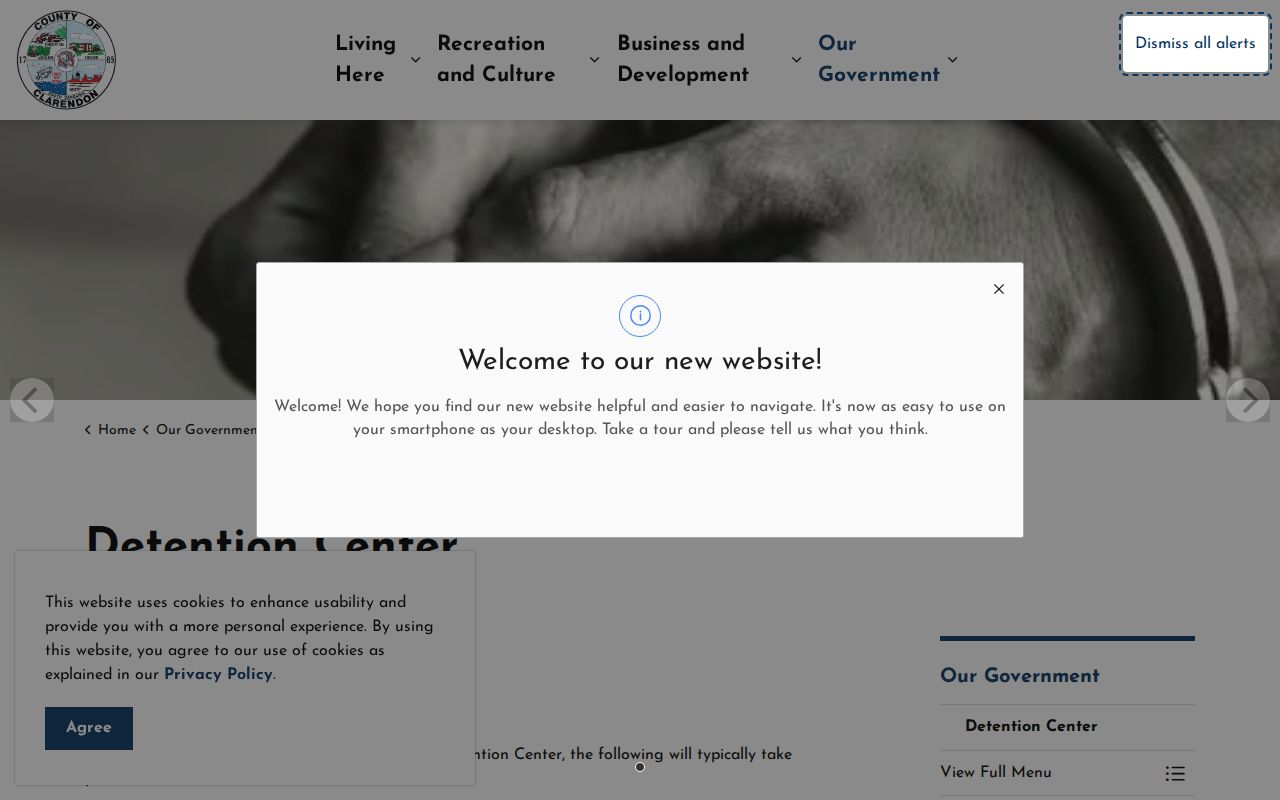
The source supports all-charge clearance, processing, and direct verification, while offering no rolling three-day release control.
The same source explains why a fixed span is more useful than a vague weekend label. A court action can occur first, followed by review of other charges, notification, warrant checks, and the final escort. Place each fact on its own timeline. If the release falls just outside the requested period, expand the record request with new exact endpoints instead of changing the meaning of the first result.
When several names are sought, list each person and known booking separately. Ask the records custodian whether an existing daily log can meet the request. Do not assume the office must create a new sorted report, add photos, or classify destinations that are not maintained as fields. Clear scope helps the office identify responsive records and explain any lawful limits.